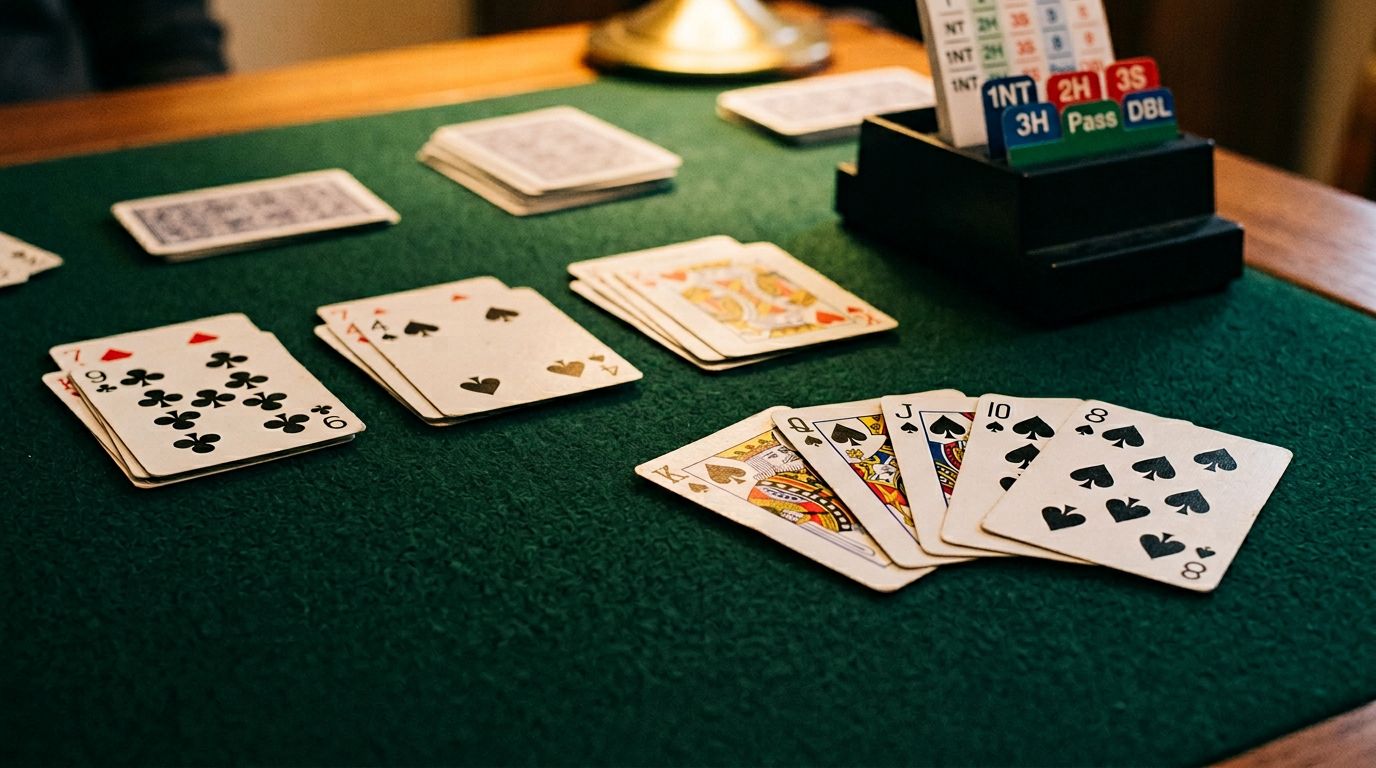
Trump Management: When to Draw Trumps and When to Wait
“Draw trumps” is the first thing beginners learn about playing suit contracts. And most of the time, it’s right.
But not always.
Knowing when to draw trumps immediately and when to delay is what separates decent declarers from good ones. Get it wrong and you’ll fail cold contracts or miss easy overtricks.
The Default Rule: Draw Them
Start here: if you can’t think of a reason to delay, draw trumps.
Why? Because leaving trumps out is dangerous. Opponents can ruff your winners. They can gain tempo with forcing plays. They can scramble the hand.
You have a 5-3 trump fit. You have nine tricks if nothing bad happens. Draw trumps, take your tricks, claim. This is the right line maybe 70% of the time.
The question is: what about the other 30%?
When to Delay Drawing Trumps
You need a specific reason to leave trumps outstanding. Here are the valid ones:
1. You Need to Ruff Losers in Dummy
This is the most common reason.
Dummy:
♠ A 7 4 2
♥ 8 6 3
♦ A 5
♣ 9 7 6 2
You:
♠ K Q J 10 9
♥ A 7
♦ K 7 4 2
♣ A K 4
You’re in 4♠. Count losers: two hearts, one diamond, one club. That’s four. You can only afford three.
The fix: ruff your losing heart in dummy. But you need to do it before drawing all of dummy’s trumps.
Win the opening lead, cash the ♥A, ruff a heart in dummy. Now draw trumps. You lose only three tricks.
Draw trumps first and you go down. You’ll have the same four losers with no way to get rid of one.
2. You Need Dummy’s Entries
Sometimes dummy’s only entries are small trumps. Use them before drawing trumps kills them.
Dummy:
♠ 7 6 3
♥ K Q J 10 9
♦ 7 4
♣ 9 6 2
You:
♠ A K Q J 10
♥ 6 4
♦ A K 3
♣ A K 4
You’re in 6♠. You have 11 top tricks and a twelfth from dummy’s hearts, if you can get there.
Draw all the trumps and dummy’s dead. You can’t reach those heart winners.
Instead: win the opening lead, cash one high spade (in case trumps are 4-0), then play a small spade to dummy. Cash the hearts, pitching your losers. Now draw the last trump.
3. Crossruff is Better Than Drawing Trumps
In a crossruff, you score trumps separately in each hand instead of drawing them.
Dummy:
♠ A 9 7 6
♥ 7 6 5 2
♦ A 8 6 3
♣ 4
You:
♠ K Q J 10 8
♥ 4
♦ 7 4
♣ A K Q J 10
You’re in 4♠. Count your tricks if you draw trumps: five spades, five clubs, one diamond. That’s 11.
But what if hearts are 4-4? If you draw trumps, you take 11 tricks. Fine.
What if hearts are 5-3 or 6-2? Now the crossruff is better. Ruff two hearts in hand, ruff two diamonds in dummy. Combined with your side winners, that’s more tricks.
The key: cash your side aces before starting the crossruff. If you don’t, opponents will discard from those suits, then ruff your winners.
The Forcing Game
Sometimes opponents force you to ruff in your long hand. This shortens your trumps and can cause you to lose control.
Dummy:
♠ 7 6 3
♥ K 6 2
♦ A 9 7 4
♣ 8 6 2
You:
♠ A K Q J 10
♥ 7 4
♦ K 5
♣ A K 7 4
You’re in 4♠. They lead hearts, you win the ♥K. You have one heart loser, one club loser. That’s two. You’re fine.
They continue hearts. If you ruff, you’re down to four trumps. They still have four trumps. If you draw trumps, you’ll run out before they do. They’ll ruff your clubs.
This is the forcing defense. They’re making you ruff in the long hand.
Your counter: don’t ruff. Discard a loser instead. Yes, you’ll lose an extra heart trick, but you keep control of trumps. You’ll go down if you ruff. You make it if you pitch a loser.
This feels wrong at first. You’re letting them win a cheap trick. But it’s the only way to maintain trump control.
Trump Length Matters
With an eight-card fit, you can usually afford to use one of dummy’s trumps for a ruff.
With a nine-card fit, you have extras. Use them.
With a seven-card fit, be careful. You might not have trumps to spare. Drawing them might be essential.
The Hold-Up in Trumps
You have:
Dummy: 7 6 3
You: A K Q J 10
Trumps are 3-1. You can draw three rounds and claim.
But what if you need to ruff something in dummy later? Maybe leave one trump out. Draw two rounds, use dummy’s last trump, then draw the last one.
Or suppose you have:
Dummy: 9 7 3
You: A K Q J 10
Same holding, but now dummy’s trumps are worthless. Draw all the trumps immediately. There’s no benefit to leaving that little 3 out there.
Common Mistakes
Drawing trumps with four fast losers. You have three heart losers and one club loser in a spade contract. If you draw trumps, they’ll cash four tricks. You needed to ruff a heart in dummy first.
Not drawing trumps when you should. You have ten top tricks in 4♥. You get cute and try for an eleventh. Opponent ruffs your winner. Now you’re down one. Draw trumps, take your ten tricks, move on.
Crossruffing without cashing side winners. You start ruffing back and forth. Opponent discards their small cards, then ruffs your ace. Always cash outside winners before starting a crossruff.
Drawing too many rounds too fast. You needed dummy’s third trump for an entry. You drew three rounds out of habit. Now you can’t get to dummy.
When Both Options Work
Sometimes it doesn’t matter. You can draw trumps or delay, either way makes the contract.
In those cases, draw trumps. It’s simpler, and simplicity reduces errors. Don’t get fancy when you don’t have to.
Reading the Opponents
If they’re continuing a suit even though you can ruff in dummy, maybe they know something. Maybe trumps are 4-1 and they’re trying to shorten your hand. Adjust your plan.
If they shift at trick two, they’re probably worried you’ll establish a suit. That tells you something about the distribution.
Use their defense to refine your plan.
The Test Question
Before drawing trumps, ask: “If I draw trumps now, will I still make this contract?”
If the answer is yes, draw them.
If the answer is no, figure out what you need to do first, then draw trumps.
Two-Step Principle
When you need to delay drawing trumps, do the urgent thing first, then draw trumps second.
Ruff your losers, then draw trumps.
Use dummy’s entries, then draw trumps.
Cash outside winners for a crossruff, then start crossruffing.
The pattern is always: urgent task first, trumps second. Not the reverse.
Example: Putting It Together
You’re in 4♥:
Dummy:
♠ 7 4
♥ K 9 6 2
♦ A Q J 10 8
♣ 7 4
You:
♠ A 6 2
♥ A Q J 10 8
♦ 7 4
♣ A K 3
They lead the ♠K. You have two spade losers, one diamond maybe. If the diamond finesse works, you’re fine.
But wait. You have five diamond tricks if the finesse works. Where are you going to put all those tricks? You only have one diamond loser to pitch.
Here’s the plan: win the ♠A, draw exactly two rounds of trumps, then take the diamond finesse. If it works, ruff a diamond to establish the suit. Use dummy’s last trump as an entry to cash the diamonds.
If you draw three rounds of trumps, you can’t get back to dummy’s diamonds. If you don’t draw any trumps, an opponent might ruff the third diamond.
Two rounds is the Goldilocks number.
Improve Your Declarer Play with Brian
Brian analyzes your hands and explains the best declarer strategy, from planning your play to executing endplays. Try Brian free →
The Bottom Line
Draw trumps unless you have a specific, concrete reason not to. Valid reasons: ruffing losers in dummy, preserving entries, crossruffing, or maintaining trump control against a forcing defense.
Everything else is just drawing trumps. Do it, then take your tricks.