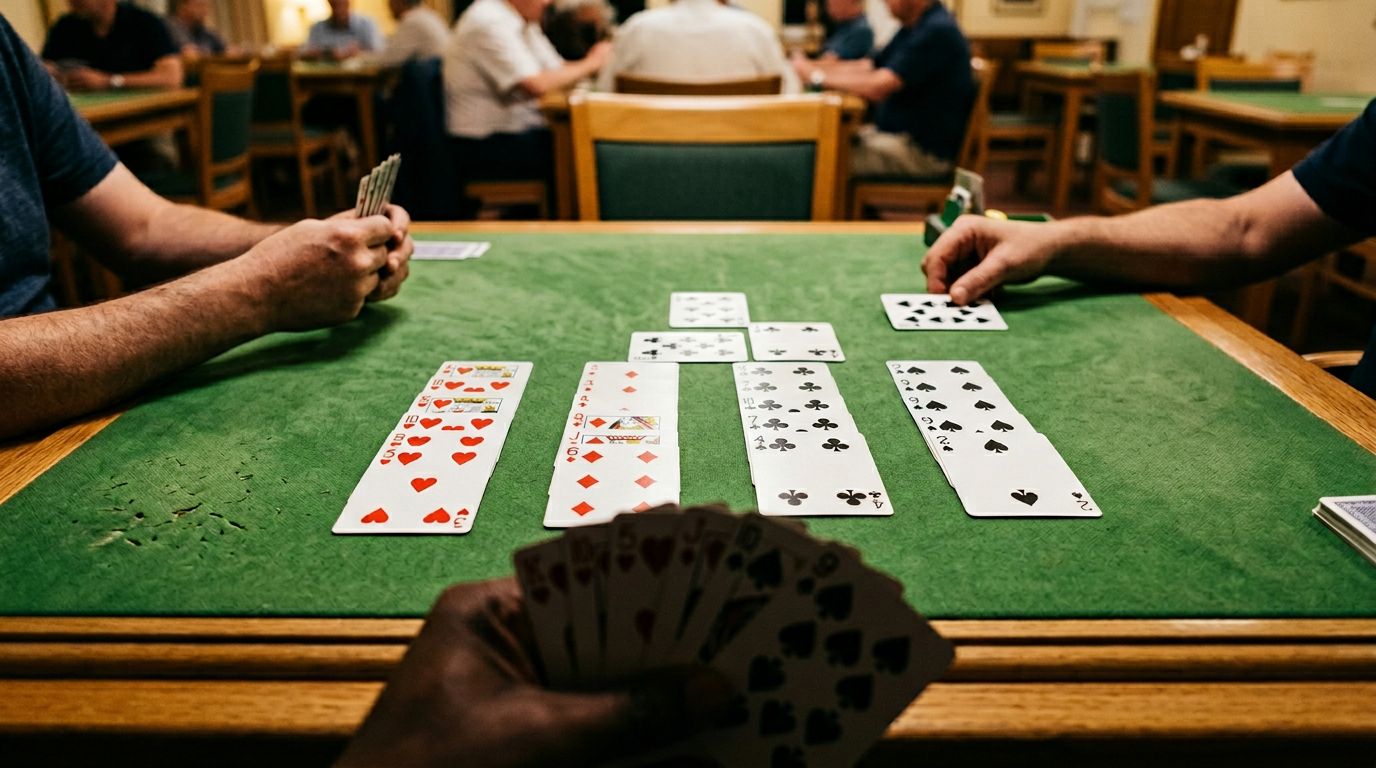
Trump Promotion Plays
You’re defending a suit contract. Declarer has more trumps than you. They’re going to draw your trumps and claim.
Unless.
Unless you can manufacture an extra trump trick that shouldn’t exist. By forcing declarer to ruff. By making them overruff partner. By promoting a trump that looked worthless into a winning trick.
These are trump promotion plays. They’re beautiful, they’re surprising, and they turn losing defenses into winners.
The Uppercut
The most elegant trump promotion. You ruff with a high trump (even though you know you’ll be overruffed) to promote partner’s intermediate trump into a winner.
Example Hand #1: The Classic Uppercut
Contract: 4♠ by South

Dummy (North)
♠ Q 6 3
♥ A 8 5
♦ K Q J 10
♣ 7 6 2

You (East)
♠ 8
♥ Q J 10 3
♦ 9 7 6 2
♣ K Q J 5

Partner (West)
♠ J 10 4
♥ 9 7 6 2
♦ 8 5
♣ A 10 9 3

Declarer (South)
♠ A K 9 7 5 2
♥ K 4
♦ A 4 3
♣ 8 4
Partner leads ♣A, you encourage with the queen. Partner continues ♣3, you win the king, declarer follows.
You’re looking at dummy’s four diamond winners. Declarer will pitch heart losers on those diamonds unless you do something now.
Lead the ♣J (a third club). Dummy is out, has to ruff. You only have the ♠8, but ruff anyway!
Declarer overruffs your 8 with the ace (or king). So you didn’t take a trick. What did you accomplish?
Look at partner’s trumps. Partner has J-10-4. Dummy has Q-6-3. Declarer started with A-K-9-7-5-2.
By forcing declarer to ruff high (with the ace), you promoted partner’s J-10. Declarer now can’t pick up partner’s jack. Partner’s ♠J is the setting trick.
If you’d exited passively (say, a heart), declarer draws trumps (finessing dummy’s queen through partner’s jack), runs diamonds, makes the contract.
The uppercut promoted partner’s jack. Down one.
When to Uppercut
Uppercut when:
- You have a short trump (singleton or void)
- Partner likely has an intermediate trump (J, 10, or 9)
- You can force declarer to ruff high
- Promoting partner’s trump will create an extra trick
You don’t need to know for sure partner has the right trump. If there’s a good chance, try it. Worst case, you give up nothing (declarer was always drawing your trumps anyway).
The Overruff
Different from the uppercut. Here you actually want to overruff declarer (or dummy).
Example Hand #2: The Critical Overruff
Contract: 4♥ by South

Dummy (North)
♠ 6 4
♥ K Q 10 4
♦ A 8 5 2
♣ 9 6 3

You (East)
♠ K Q J 10 3
♥ 6 2
♦ K 7
♣ A 10 7 2

Bidding: 1♥ - 3♥ - 4♥
You lead ♠K, partner plays the 2, declarer the 5. You continue ♠Q, partner plays the 7, declarer ruffs with the ♥3.
Should you overruff?
Yes! Overruff with the ♥6.
Why? Because if you discard instead, declarer will draw trumps and you’ll never get a trump trick. By overruffing now, you’ve scored your ♥6 while it’s still good.
Now return a spade. Declarer has to ruff again (say with the ♥7). Partner overruffs (if they can) or discards.
Count trumps: Declarer started with 5 hearts (dummy has 4, you have 2, partner has 2, so declarer has 5). Declarer has ruffed twice (the ♥3 and ♥7). They’re down to 3 trumps.
You still have one trump (the ♥2). When declarer leads trumps, you’ll take your second trump trick or partner will win theirs.
If you’d discarded instead of overruffing, declarer ruffs once, draws trumps, makes the contract.
When to Overruff
Overruff when:
- Your trump is small anyway (you won’t win it later)
- You can force declarer to ruff again
- Declarer is short on trumps and forcing them costs tempo
Don’t overruff when:
- You have a natural trump trick (like the ace or king)
- Discarding is more valuable (you’re pitching a loser)
- Overruffing doesn’t actually gain a trick
Promoting Through Forcing Plays
Make declarer ruff so many times they lose control of trumps.
Example Hand #3: The Forcing Defense
Contract: 4♠ by South

Dummy (North)
♠ K 10 4
♥ 7 6
♦ Q J 10 9 3
♣ A 8 2

You (West)
♠ 8 7 6 2
♥ A K Q J 5
♦ 6
♣ 9 7 3

Bidding: 1♠ - 2♦ - 2♠ - 4♠
You lead ♥A (partner plays the 2, declarer the 3). Continue ♥K (partner plays the 4, declarer the 8).
Continue hearts. Again. And again. Force declarer to ruff every single time.
Why? Because you have four trumps. Declarer probably started with five (partner showed out or has a singleton). By forcing declarer to ruff three times, you reduce declarer to two trumps. You still have four.
Now you have more trumps than declarer. You’ve gained trump control. When declarer tries to draw trumps, you’ll win and cash your long hearts.
This is forcing defense: Attack declarer’s trump length by making them ruff until they lose control.
When to Force Declarer
Force when:
- You have four or more trumps
- You have a long side suit to keep leading
- Declarer likely has five trumps (so forcing three times takes control)
Don’t force when:
- Declarer has six or more trumps (you can’t force enough times)
- You have only three trumps (not enough to outgun declarer)
- Forcing lets declarer pitch losers (they wanted to ruff anyway)
The Trump Promotion by Ducking
Sometimes you promote a trump by refusing to overruff.
Example Hand #4: Promotion by Refusal
Contract: 4♥ by South

Dummy (North)
♠ A K 4
♥ J 10 9 3
♦ 8 6 2
♣ A 5 3

You (East)
♠ 8 7 6 3
♥ Q 6 2
♦ K 7
♣ Q J 10 4

Partner leads ♣K
Your queen says “continue.” Partner cashes ♣A (declarer follows). Partner leads a third club.
Dummy ruffs with the ♥9.
Don’t overruff!
You have ♥Q-6-2. If you overruff with the queen, you take one trick and that’s it. Declarer will draw your remaining trumps easily.
Instead, discard a spade. Save your queen.
Now when declarer leads a trump from dummy, you’re sitting over dummy’s J-10 with your queen. Declarer can’t avoid losing to your queen without losing to partner’s king (if partner has it).
By refusing to overruff, you preserved your queen as a natural trick. If you’d overruffed, you’d have wasted it.
When to Refuse the Overruff
Refuse when:
- Your trump is high enough to win a trick naturally
- Overruffing doesn’t gain (dummy ruffed low, you have to ruff high)
- Discarding lets you pitch a loser profitably
Overruff when:
- Your trump is small anyway
- You’re in tempo (need to shift suits or cash out)
The Trump Coup
This is declarer play, not defense, but understanding it helps you defend against it.
Declarer reduces their trump length to match yours, then leads through you, making you ruff first so they can overruff.
Your defense: Don’t let them reduce trumps. Cash side suit winners early. Force them to ruff before they’re ready.
Example Hand #5: Preventing the Coup
Contract: 6♠ by South

Dummy (North)
♠ A K 4
♥ 9 6 3
♦ A Q J 10
♣ 7 6 2

You (East)
♠ Q J 10
♥ 7 4
♦ 9 8 6 3
♣ A Q 8 5
Partner leads ♥K (declarer wins the ace). Declarer draws two rounds of trumps, partner shows out (pitches a heart). You have ♠Q-J-10 left, declarer has one trump.
Declarer cashes ♦A, then ♦K, then ♦Q. All following.
Now declarer leads a fourth diamond. You’re out. You have to ruff with your ♠Q. Declarer overruffs with their last trump. Down one becomes making six.
What should you have done?
After declarer drew two rounds of trumps, you should’ve cashed the ♣A! Then led another club.
Why? Because declarer needs to reduce their trump length to match yours (they have 1, you have 3, they need to get down to 1 themselves). By cashing clubs early, you force declarer to ruff before they’ve set up the diamonds. They can’t execute the trump coup.
The Defensive Trump Promotion Checklist
When defending a suit contract, ask:
Can I uppercut?
- Do I have a short trump?
- Can I force declarer to overruff?
- Does partner likely have an intermediate trump?
Should I overruff?
- Is my trump worthless otherwise?
- Will overruffing let me force declarer again?
- Or should I save my trump for a natural trick?
Can I force declarer?
- Do I have four or more trumps?
- Can I lead a long suit repeatedly?
- Will forcing make declarer lose trump control?
Should I refuse to overruff?
- Is my trump high (Q, K, A)?
- Will it win naturally later?
- Is discarding more valuable?
The Timing
Trump promotions are all about timing. Too early, declarer has time to recover. Too late, declarer’s already drawn your trumps.
The sweet spot: After you’ve seen dummy and counted declarer’s shape, but before declarer draws all the trumps.
Usually that’s tricks 2-4. By trick 5, it’s often too late.
Example Hand #6: Timing the Uppercut
Contract: 4♠ by South

You (East)
♠ 8
♥ K J 10 4
♦ 9 7 6 3
♣ A Q 6 2

Partner leads ♥A, you play ♥4, declarer ♥5
Partner continues ♥2 to your king, declarer follows ♥6
You’re looking at dummy (say dummy has ♠K-Q-10-x and ♦A-K-Q-J).
Declarer will pitch diamonds on dummy’s hearts if you don’t act.
Lead a third heart RIGHT NOW (trick 3). Force declarer to ruff. If dummy ruffs, you uppercut with your ♠8 (promoting partner’s potential jack). If declarer ruffs in hand, that’s one less trump they have for drawing partner’s.
Don’t wait. Don’t cash your ♣A first. Just attack immediately.
If you cash ♣A and then lead hearts, declarer might draw trumps first and you’ve lost your chance.
Practice Recognition
Trump promotions are hard to see until you’ve practiced.
Next time you defend a suit contract:
- Count declarer’s trumps
- Count partner’s likely trumps
- Ask: “Can I promote one of partner’s trumps?”
If yes, figure out how. Uppercut? Force? Refuse to overruff?
Most of the time the answer is no. But the one time in ten where it works, you’ll beat a contract that looked cold. And that’s the best feeling in bridge.
Strengthen Your Defense with Brian
Defense is half the game. Brian can analyze defensive situations and explain the winning approach. Try Brian free →
The Psychology
Declarer doesn’t expect trump promotions. They’re counting tricks, planning to draw trumps, looking at dummy’s long suit.
When you uppercut, it jolts them. “Wait, where did that trump trick come from?”
Use that. Make the unexpected play. Force them to ruff. Promote partner’s seemingly worthless nine into the setting trick.
That’s the beauty of trump promotion. You’re creating tricks from thin air. Declarer thinks they have this. You show them they don’t.