The Vanderbilt Era: How a Millionaire on a Cruise Ship In...
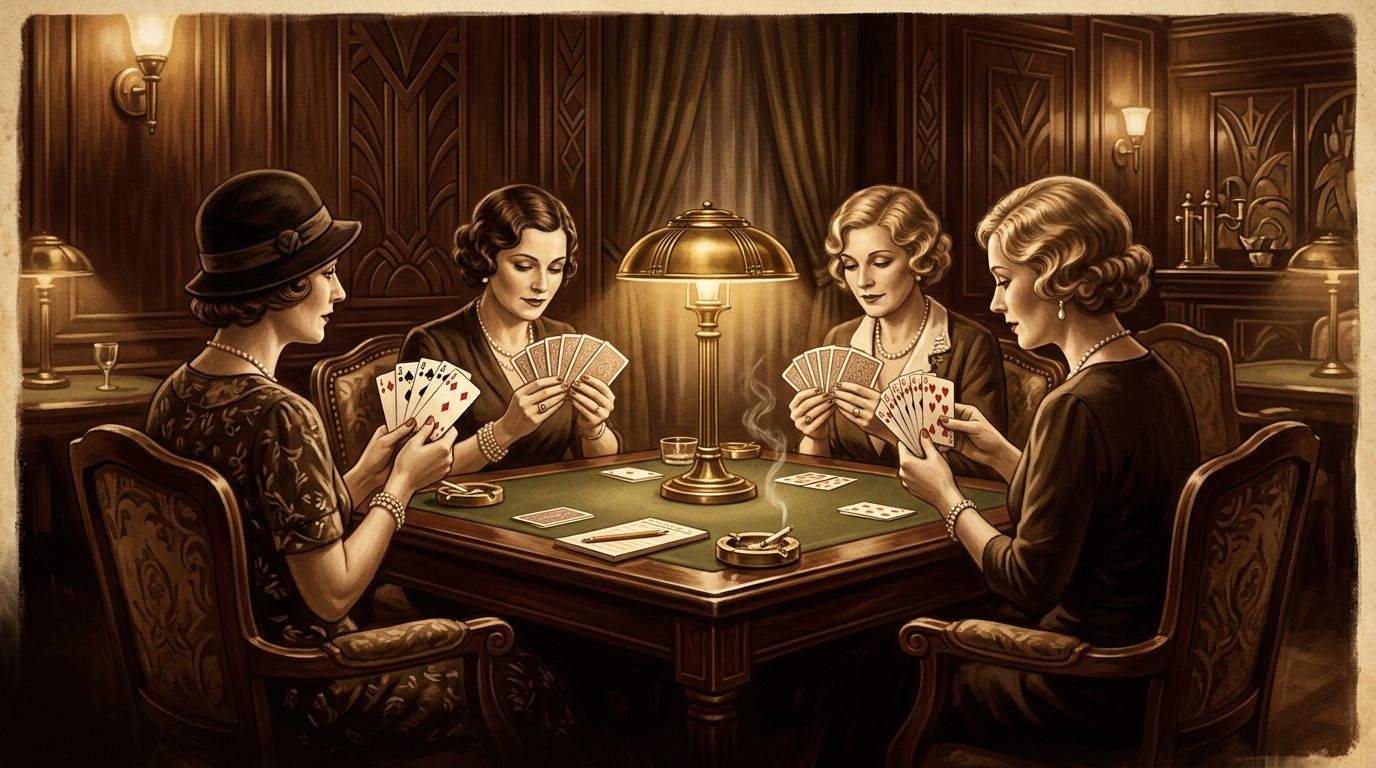
October 31, 1925. The steamship Finland is cruising from Los Angeles toward Havana, carrying passengers with time to kill and cards to play. Among them is Harold Stirling Vanderbilt, a 41-year-old railroad heir who’s about to accidentally create the game that will dominate card tables for the next century.
He just doesn’t know it yet.
The Man Who Had Everything Except a Better Scoring System
Harold Vanderbilt was born into the kind of money where “the family business” meant railroads and steamship lines. His great-grandfather Cornelius built the family fortune. By the time Harold came along, being a Vanderbilt meant you could do pretty much whatever you wanted.
What Harold wanted was to win at competitive sailing. He successfully defended the America’s Cup three times (1930, 1934, 1937), which gives you some sense of the man’s competitive drive and strategic thinking. He approached sailing the way he approached everything: methodically, intelligently, with attention to detail and an engineer’s mindset.
He also loved bridge. Specifically, Auction Bridge, which was the game everyone played in the 1920s. But Auction Bridge had a problem, and it bothered him.
The Auction Bridge Problem
Here’s what annoyed Vanderbilt about Auction Bridge: the scoring system rewarded conservative bidding. If you bid 2♠ and made five, those three overtricks counted just as much toward game as bid tricks. So smart players would underbid their hands, make a pile of overtricks, and eventually limp into game.
This made for boring auctions. More importantly, it removed skill from the bidding. Why stick your neck out bidding game when you could bid two and make five?
Vanderbilt knew there were other bridge variants that handled this differently. Plafond, popular in France, had vulnerability and only counted bid tricks toward game. But Plafond had its own quirks and hadn’t caught on in America.
So there he was on the Finland, playing endless rubbers of Auction Bridge with three friends: Frederic S. Allen, Francis M. Bacon III, and Dudley L. Pickman Jr. (The fact that all these guys had three names tells you something about the social circle.) The ship’s voyage would take ten days. Vanderbilt figured he might as well use the time to fix bridge.
Ten Days to Change the Game
Vanderbilt didn’t just scribble down some ideas. He worked systematically through the entire scoring structure, considering how each change would affect strategy and play.
His core insight was simple: only bid tricks should count toward game. Overtricks would score points, sure, but they wouldn’t help you get to game. This one change meant you had to evaluate your hand accurately and bid to the right level.
But if only bid tricks counted, he needed to recalibrate the entire scoring table. How many points for game? What about slams? How much should doubles and redoubles be worth?
He borrowed the concept of vulnerability from Plafond. Being vulnerable meant bigger penalties when you went down, but also bigger bonuses when you made your contract. This added a risk-reward calculation that changed throughout the rubber.
He worked out the scoring for partscores, games, and slams. He established that notrump tricks would score more than suit tricks (40 for the first notrump trick, 30 thereafter, versus 30 per trick in major suits and 20 in minors). He calculated the exact penalties for undertricks, both vulnerable and not vulnerable.
He tested these rules with his three friends. They played hand after hand, checking if the scoring created the right incentives. Did it reward accurate bidding? Did it make the game more interesting? Did it create genuine strategic choices?
By the time the Finland docked in Havana on November 1, 1925, Vanderbilt had his complete scoring system written out. He called it “Contract Bridge” because you were now contracting to make a specific number of tricks.
The world’s most popular card game had just been invented during a cruise ship vacation.
Why This Scoring System Worked
Vanderbilt’s genius was in getting the numbers exactly right. And when you look at the scoring, you realize how carefully he thought it through.
Game in notrump or a major required 100 points: 3NT (40+30+30), 4♥ or 4♠ (4×30). Game in a minor required 5♣ or 5♦ (5×20). This made notrump and the majors the preferred strains, which created interesting tactical decisions. Should you play 3NT or 5♣? Often the notrump game is riskier but better scoring.
The slam bonuses (500 for small slam not vulnerable, 750 vulnerable; 1000 for grand slam not vulnerable, 1500 vulnerable) were big enough to make slams worthwhile but not so big that you’d shoot them on air.
Vulnerability roughly doubled your penalties when you went down, but increased your bonuses only modestly. This meant going down vulnerable was genuinely scary, which is exactly what Vanderbilt wanted. Vulnerability should make you sweat.
The scoring for doubles and redoubles created the psychological warfare we know and love. Double a making contract and give them extra points? That’s going to sting.
Every number in Vanderbilt’s system served a purpose. The result was a game where bidding became as important as card play, where judgment mattered as much as technique, where every hand presented genuine choices.
The Rollout
Vanderbilt returned to New York and started showing his new game to friends at the elite clubs where the Vanderbilt name opened doors. The Whist Club of New York tried it. People liked it. Word spread.
But here’s the thing: Vanderbilt wasn’t a promoter. He was a gentleman amateur who’d invented a game because the old game annoyed him. He published the rules in a small booklet. He answered questions from interested players. But he didn’t have the personality or the desire to turn Contract Bridge into a mass phenomenon.
That job fell to Ely Culbertson, a far more colorful character who we’ll meet in the next article. Culbertson took Vanderbilt’s game and sold it to America through books, magazine articles, tournaments, and sheer promotional genius.
Did this annoy Vanderbilt? Probably. He’d invented the game and written the first laws. Culbertson got rich and famous promoting it. But Vanderbilt wasn’t in it for the money or fame. He had plenty of both already.
The 1927 Laws
In 1927, the Whist Club of New York published the first official Laws of Contract Bridge. Vanderbilt had a major hand in writing them. These laws established Contract Bridge as a serious game with standardized rules, not just a variant someone played on a cruise ship.
The laws were adopted by clubs across America and Europe. Contract Bridge quickly displaced Auction Bridge. By 1930, “bridge” meant Contract Bridge. Auction Bridge was dying.
The speed of this transition is remarkable. Bridge players can be a conservative bunch (we’re still arguing about whether five-card majors are modern or traditional). But Contract Bridge was so clearly superior to Auction Bridge that players switched in just a few years.
Vanderbilt’s Later Years
Vanderbilt kept playing bridge and sailing competitively. He served on the board of the Whist Club and later the prestigious Regency Club. He helped arbitrate disputes about the laws. He watched his game spread across the world.
He also kept tinkering. In 1964, at age 80, Vanderbilt published a book proposing a new bidding system that he thought was more logical than Standard American. The system didn’t catch on, which probably disappointed him, but honestly, how many people get to successfully revolutionize a game once, let alone twice?
Harold Vanderbilt died in 1970 at age 86. By then, Contract Bridge had an estimated 100 million players worldwide. Not bad for something he invented to pass time on a cruise.
The Scoring System Lives On
Here’s the remarkable thing: we still use Vanderbilt’s scoring system. Oh sure, duplicate bridge uses matchpoints and IMPs rather than rubber bridge scoring, but the underlying values are the same. Game is still 100 points. Slams still score the same bonuses. Vulnerability still works the way Vanderbilt designed it in 1925.
Think about that. In a hundred years of bridge evolution, with computers analyzing every aspect of the game, with millions of hands played and studied, nobody’s come up with a better scoring system than what a millionaire designed on a cruise ship in ten days.
That’s not luck. That’s genius.
What If Vanderbilt Had Never Taken That Cruise?
It’s fun to wonder. Would someone else have invented Contract Bridge? Probably, eventually. The problems with Auction Bridge were obvious to anyone who played seriously. But would they have gotten the scoring exactly right? Would the game have taken off as quickly?
We’ll never know. What we do know is that Vanderbilt saw a problem, worked out an elegant solution, and created something that brought joy to millions of people. He could have spent that cruise drinking and gambling. Instead, he gave us the game we love.
Next time you bid a close game and make it exactly, remember Harold Vanderbilt. He designed the scoring system so that making your contract would feel exactly that good.
And next time you go down in a cold game vulnerable, you can blame him for making it feel that bad.
Either way, the man knew what he was doing.
The Vanderbilt Legacy
Vanderbilt never sought glory for inventing Contract Bridge. He was happy to remain a background figure while others promoted and popularized the game. This modesty seems almost quaint now, in an age where everyone’s brand-building from day one.
But maybe that’s part of why the game succeeded. Vanderbilt created Contract Bridge because he wanted a better game, not because he wanted fame or money. That purity of purpose shows in the design. Every rule serves the game itself, not some promotional agenda.
Harold Stirling Vanderbilt: yachtsman, railroad executive, and the man who accidentally created the world’s greatest card game.
Not a bad epitaph.