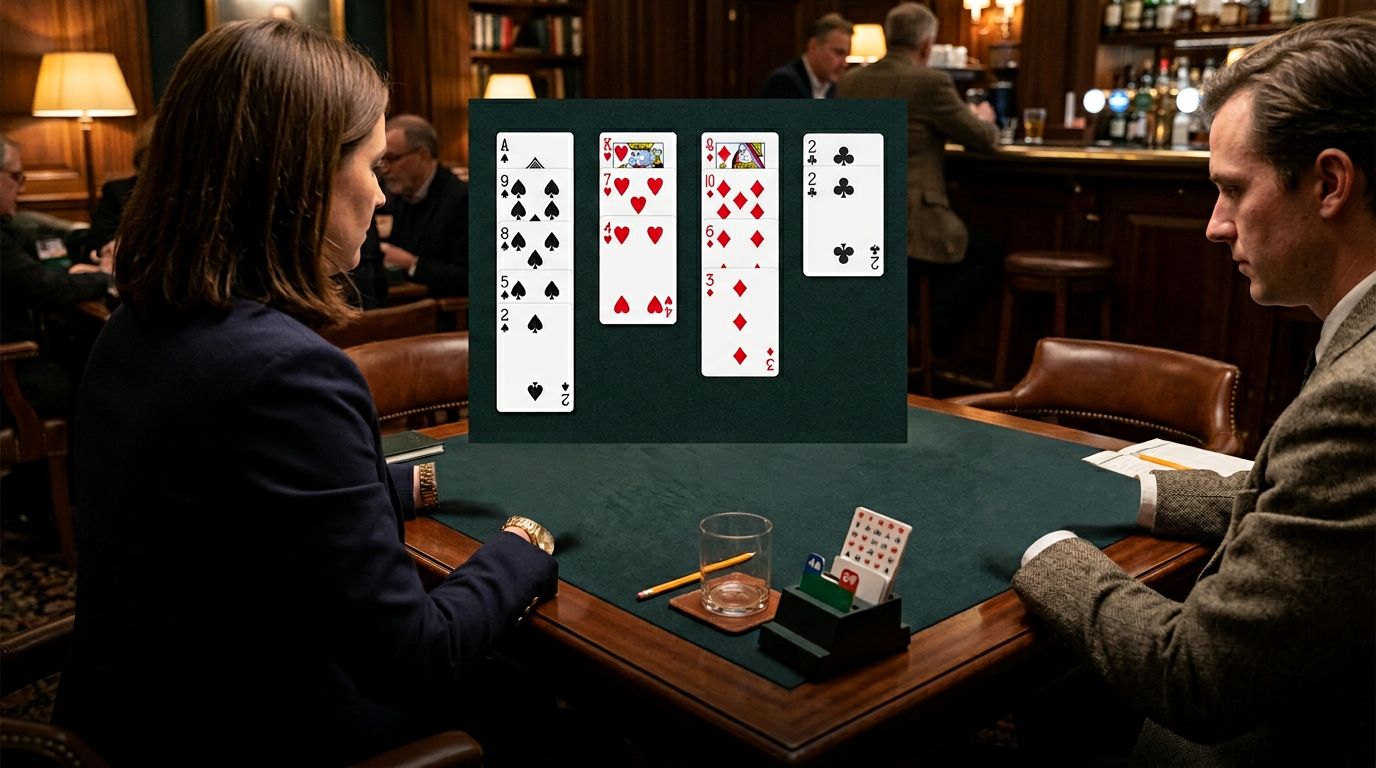
Defensive Partnership in Bridge: How Defenders Work Together
Defense is the only part of bridge where you have a partner but can’t talk to them. You and partner have to beat the contract together, but all you have are the cards you play.
Good defenders make it look easy. They defend like they can see each other’s hands. They know when to grab tricks and when to wait. They know what partner needs without asking.
That doesn’t happen by accident. It’s trust, communication, and a lot of counting.
Your Job vs. Partner’s Job
You and partner aren’t playing separate games. You’re a team.
One defender often has the strong hand. The other has the weak hand. Your jobs are different.
Strong hand: Control the defense. Decide what suits to attack. Watch declarer’s plan and counter it.
Weak hand: Help partner. Signal clearly. Return partner’s suits. Don’t block the suit by wasting high cards.
You won’t always know at trick one which role you’re in, but by trick two or three it’s usually clear. If you opened the bidding, you’re probably the strong hand. If partner opened, they’re probably the strong hand.
Whoever is stronger controls the defense. The weaker hand helps.
Trust Partner’s Leads
When partner leads, trust their choice. They’re looking at 13 cards you can’t see. They picked this suit for a reason.
If partner leads the ♥K, they probably have the Q (or AK). Play the card that helps. If you have three small, play high to encourage. If you have the ace, play it to unblock.
Don’t override partner’s suit without a really good reason. If partner led spades, keep returning spades when you get in (unless something drastic changed).
The worst defense is when both defenders are trying to set up their own suits. Pick one suit, work together, and cash it when you can.
Signal Clearly
Your cards tell partner what you have. Use them.
On partner’s lead: Show attitude. High = I like this suit. Low = try something else.
On declarer’s lead: Show count. High-low = even number. Low-high = odd number.
On a ruff: Show suit preference. High = higher suit. Low = lower suit.
Partner can’t read your mind. Make your signals clear. Play the 9, not the 6, when encouraging. Play the 2, not the 4, when discouraging. Obvious signals are good signals.
Watch Partner’s Signals
Signals only work if you watch them.
Partner played the 2 when you led your suit. That’s discouraging. Don’t lead the suit again if you have something better.
Partner played the 9. That’s encouraging. Keep leading the suit.
Partner played the 8 then the 3 in declarer’s trump suit. High-low shows two trumps. Now you know declarer has five. You can count the hand.
Pay attention. Partner is telling you things.
Return Partner’s Suit
When in doubt, return partner’s suit.
Partner led the ♠K against 3NT. You win an ace in another suit. What do you lead back?
Lead a spade.
Partner picked spades for a reason. They probably have KQJxx or KQ10xx. If you return a spade, you’re helping set up their suit. If you switch to your own suit, you might be destroying the defense.
There are exceptions (sometimes you can see partner’s suit is dead), but the default is: return partner’s suit.
Second Hand Low, Third Hand High
These old sayings exist because they’re true most of the time.
Second hand low: When declarer leads toward dummy, you’re in second seat (after declarer, before dummy). Usually play low. Don’t waste your honors when dummy might play low.
Declarer leads a low club from hand toward dummy’s ♣KJ. You’re in second seat with ♣Q84. Play low. If you play the queen, dummy covers with the king. If you play low, dummy might finesse the jack and lose to partner’s ace.
Third hand high: When partner leads and you’re playing after dummy, play your highest card to win the trick or force out declarer’s high cards.
Partner leads a spade, dummy plays low, you hold ♠Q84. Play the queen. You’re trying to win the trick or force declarer’s ace or king.
The exceptions: If dummy has an honor that will win the trick anyway, save your honor. If dummy plays the jack and you have the queen, don’t cover (dummy’s jack is already winning). Just play low.
Count Together
You and partner should both be counting the same things:
- Declarer’s shape in each suit
- High card points in each hand
- How many tricks declarer can take
- How many tricks you can take
When you both know declarer is 5-3-3-2 and has the ♥AK but not the ♥Q, you can defend correctly.
If you count and partner doesn’t (or vice versa), you’ll make different assumptions and mess up the defense.
This is hard at first. It gets easier. Keep practicing.
Don’t Block the Suit
Blocking the suit is when your high cards get in partner’s way.
Partner leads the ♠K. Dummy has 73. You have A4. Declarer has QJxxx.
If you play the 4, partner wins the king. When partner leads the suit again, you win the ace. But now you’re stuck. You can’t get back to partner’s good spades.
If you play the ace on the first trick (unblocking), partner’s suit is clear. You can return a spade to partner’s queen, and they can cash the rest.
Whenever you have two high cards together in partner’s suit, consider unblocking. Play the higher one first to avoid blocking the suit.
Work Out Who Has Entries
Entries matter on defense just like they matter for declarer.
Partner leads a suit. You have the ace. Should you take it now or duck?
Depends on who has entries. If partner has entries (side aces or kings), you can duck and take your ace later. Partner will get in and lead the suit again.
If partner has no entries and you duck, you might never get to cash partner’s good cards. Take the ace now and return the suit while you can.
This is where counting high cards helps. If you know partner opened the bidding but hasn’t shown up with any honors yet, they probably have entries.
Patience vs. Urgency
Sometimes you need to cash out. Sometimes you need to wait.
Cash out when:
- Declarer is about to pitch losers on a long suit
- Declarer is about to set up a side suit for discards
- You can see enough tricks to beat the contract right now
Wait when:
- Declarer might misguess if you don’t show your strength
- Cashing your tricks sets up declarer’s suit
- Declarer needs to take a losing finesse if you give them time
Against notrump, it’s usually a race. Set up your suit fast before declarer sets up theirs.
Against a suit contract, patience often wins. Don’t crash your honors. Don’t lead away from kings. Let declarer do the work and make the mistakes.
When Partner Makes a Mistake
Partner will make mistakes. So will you.
When partner leads the wrong suit or makes a bad play, don’t give up. Work with what you have.
If partner led from a dead suit and now you’re on lead, switch to something better. Don’t stubbornly keep returning partner’s suit when it’s clearly not working.
Bridge is about recovering from mistakes, not blaming each other. Focus on beating the contract with whatever chances are left.
The Hardest Part: Trust
The hardest thing about defensive partnership is trusting partner when you can’t see their hand.
Partner switches to a new suit in the middle of the hand. You have no idea why. Do you return their suit when you get in?
Usually, yes. Partner saw something you didn’t. They switched for a reason. Trust them.
Partner signals low (discouraging) in your suit. You have KQJ10x and were planning to run it. Do you switch?
Usually, yes. If partner has nothing in your suit and something in another suit, switching might be right.
You won’t always understand partner’s defense in the moment. Later, when you see all four hands, it’ll make sense. Or it won’t, and you’ll talk about it.
But during the hand, when you can’t talk and you can’t see each other’s cards, trust is everything.
Playing with New Partners
With an unfamiliar partner, keep it simple:
- Lead your longest suit against notrump
- Lead top of sequences against suits
- Give clear signals (very high or very low)
- Return partner’s suits
- Count tricks, count suits
Don’t try fancy stuff. The basics work with anyone.
With a regular partner, you can get more sophisticated:
- You know their style (aggressive or passive)
- You know their signaling methods (standard or upside-down)
- You trust their judgment on switches
But even with strangers, if you both follow the basic principles, you’ll defend reasonably well.
Common Partnership Failures
Both defenders setting up their own suit
You led spades. Partner keeps leading hearts. Now declarer makes because neither suit got established.
Pick one suit. Commit to it. Work together.
Failing to cash out
You both see that declarer is setting up dummy’s long diamonds. But neither of you grabs your aces and cashes your winners in time. Declarer pitches their losers and makes.
When it’s time to cash out, cash out. Don’t wait.
Not signaling
You have Qxx in partner’s suit but play the 3 (discouraging). Partner switches to something else. You never get your queen.
Signal what you have. Partner can’t guess.
Ignoring partner’s signals
Partner played the 2 (don’t like this suit). You keep leading it anyway. Declarer makes.
Watch partner’s cards. They mean something.
The Goal: Think as One
The best defensive partnerships operate like a single mind spread across two hands.
Partner leads. You know what they have. You know what they’re trying to do. You play the card that helps.
You lead. Partner trusts you. They return your suit. You cash your winners.
No wasted tricks. No blocked suits. No confusion. Just two defenders working together to beat a contract.
That’s hard to do. It takes practice, communication after the hand, and a willingness to trust each other.
But when it works, when you and partner defend perfectly and set a contract that declarer thought was cold, it’s the best feeling in bridge.
How to Get Better Together
Discuss hands after
After the session, talk about key hands. “Why did you switch to clubs?” “I thought you had the king.” “Oh, I signaled low in hearts, did you see it?”
This is how you learn each other’s style and avoid the same mistakes.
Agree on basics
Before you play, agree on:
- Standard or upside-down signals
- Attitude or count on opening lead
- When you lead trump
- Honor leads (ace from AK or king from AK?)
Doesn’t matter which you pick. Just pick the same thing.
Cut each other slack
You’ll both make mistakes. When partner makes a bad play, assume they had a reason you don’t understand yet. When you see all the hands, you can discuss it.
During the hand, keep working together. Complaining doesn’t beat contracts.
Strengthen Your Defense with Brian
Defense is half the game. Brian can analyze defensive situations and explain the winning approach. Try Brian free →
The Bottom Line
Defense is partnership. You can’t beat contracts alone.
Lead what makes sense. Signal clearly. Watch partner’s signals. Return partner’s suits. Count together. Trust each other.
When both defenders do their jobs, declarer has to work for every trick. Contracts that should make go down. Hands that looked easy for declarer turn into struggles.
That’s what good defensive partnership does. You and partner, working together, making declarer’s life miserable.
Learn to do that, and you’ll win a lot more bridge games.